

Sunday October 25th, 2026
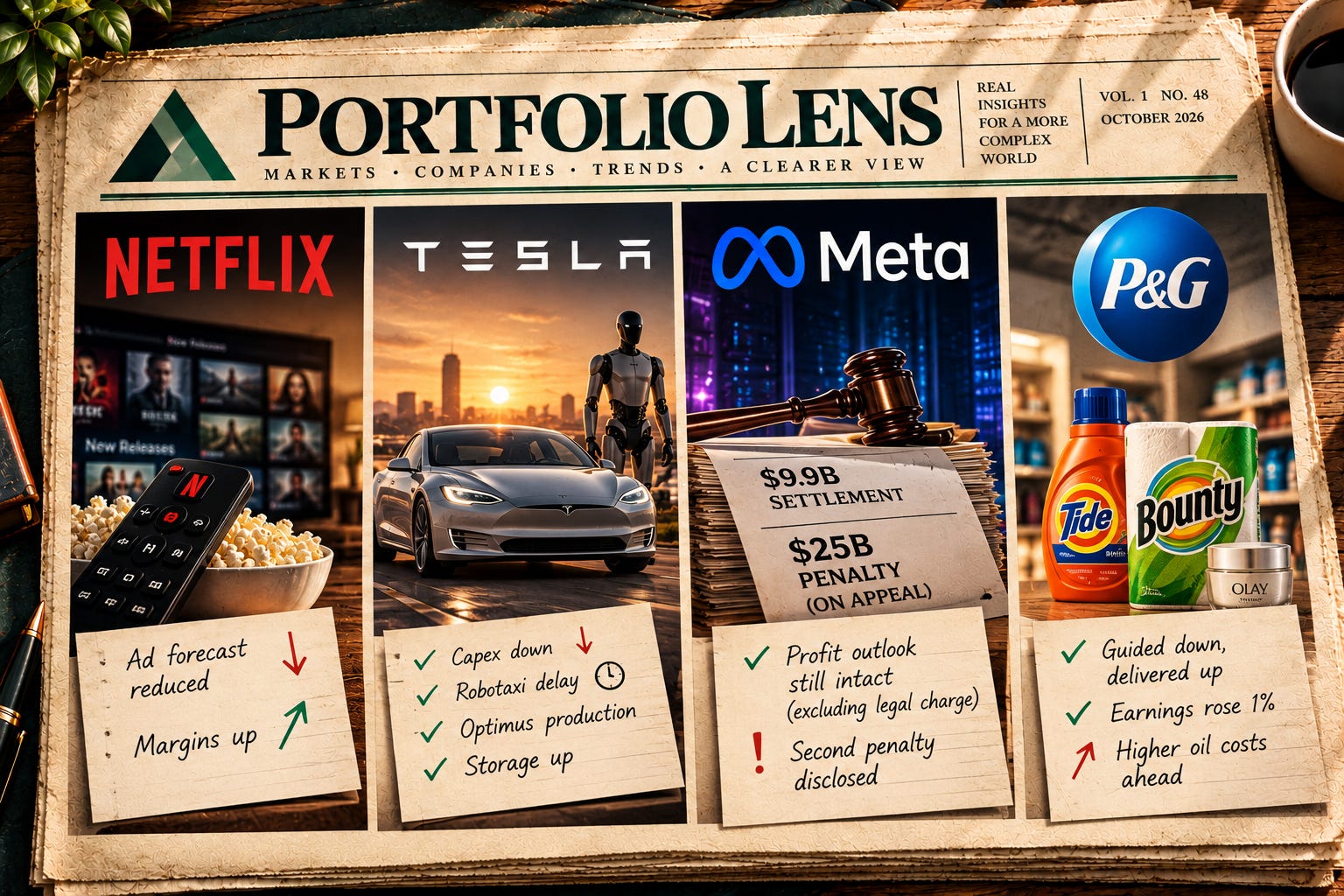
Corporate executives have a complicated relationship with their own promises. When business is good, yesterday’s forecasts become evidence of foresight. When circumstances change, those same forecasts become historical artifacts, best understood in their original context. Wall Street generally accommodates both interpretations. The difficulty for investors is distinguishing a promise fulfilled from one revised, postponed or quietly forgotten. This week offered examples of all three. Procter & Gamble warned of declining earnings and delivered growth. Tesla reduced its spending plans and pushed back a commitment on driverless cars. Netflix lowered its advertising forecast. Meta preserved its profit outlook by excluding a substantial legal charge, while another legal penalty emerged.
At Portfolio Lens, we believe corporate promises deserve something more durable than the market’s famously selective memory. Before earnings, we publish the financial thresholds that define a strong or weak quarter. We also record management’s commitments and return to them when the results arrive. The distinction matters: A forecast is not a fact, a revised promise is not a fulfilled one, and an accounting adjustment does not make an expense disappear. Our purpose is not to demonstrate a talent for predicting the future, it’s to preserve an accurate account of what was said before the future became the past.
Netflix: Slower Ads, Wider Margins
Scorecard #2 graded Netflix two Bull, one Neutral and one Bear. Netflix now expects about $2.7 billion of 2026 ad revenue, down from $3 billion. “We have seen some delays in the rollout and partner integrations for some of those new ads products,” co-CEO Greg Peters said. Full-year guidance is still $51.1 billion in revenue, up 13%, at a 31.5% operating margin. On 2027, CFO Spence Neumann said only that Netflix aims “to sustain double-digit revenue growth.”
Tesla: Checking the Open Promises
Before Tesla reported, our October 7 report counted 39 open commitments from its last four calls, none yet settled. The October 21 update and call addressed 8.
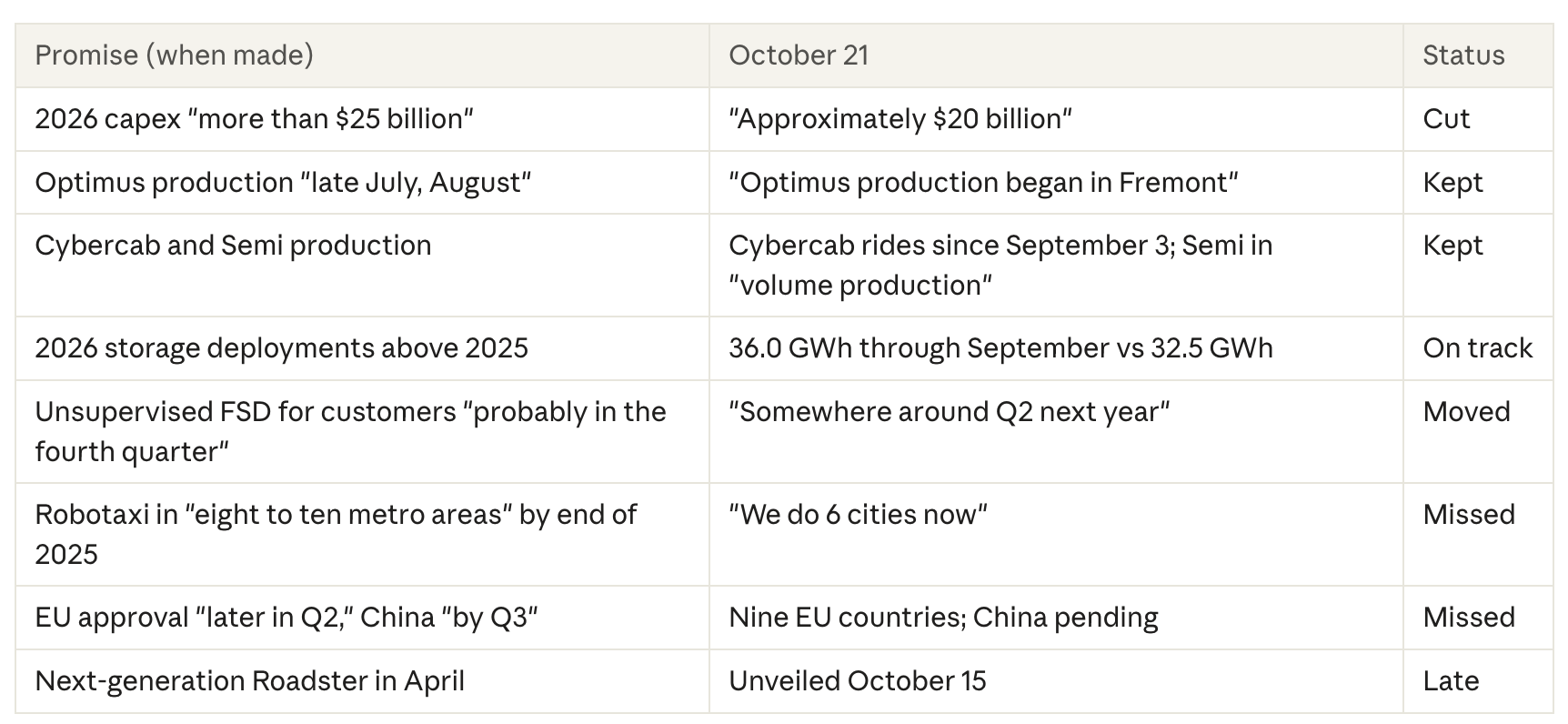
Tesla also said:
It won’t draw on its new $30 billion credit lines this year.
The six-city count, from AI software head Ashok Elluswamy, is below the seven markets Tesla reported in July, and nobody explained the gap.
Two new promises also joined the list:
Cybercab in Dallas “next month,”
Customer cars in the robotaxi fleet by mid-2027.
Meta: A Promise Kept Alive, a Second Penalty
Scorecard #2 graded Meta one Bull, one Neutral and two Bear, after a $9.89 billion settlement charge. CFO Susan Li repeated the promise: “Excluding the third quarter legal charge, we continue to expect 2026 operating income to be above 2025 operating income.” She gave no 2027 spending figure. The 10-Q disclosed what the call did not: on October 21, a New Mexico court imposed “a civil penalty in the amount of $25 billion.” Meta intends to appeal.
P&G: Guided Down, Delivered Up
In July, P&G warned that first-quarter core earnings would fall “5% or more.” They rose 1%.
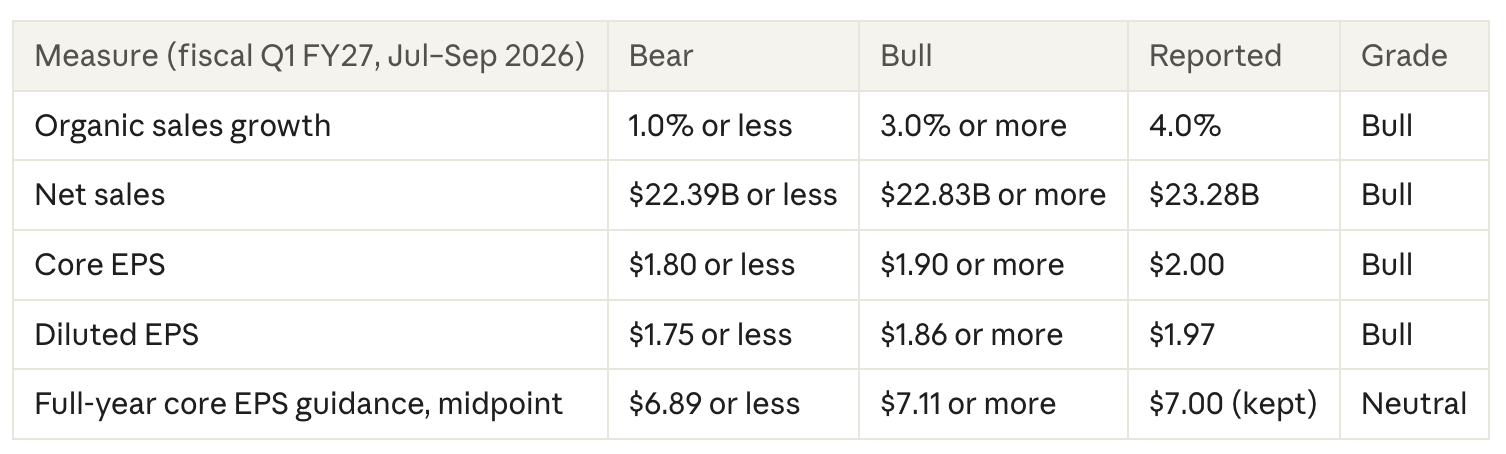
Volume drove growth. Still, P&G held its full-year range because of oil: it now expects a $1.4 billion after-tax commodity headwind, up from $1.0 billion. “We now expect materially higher cost headwinds in Q2 and the second half,” CFO Andre Schulten said.
Also Worth a Mention: Lam Research
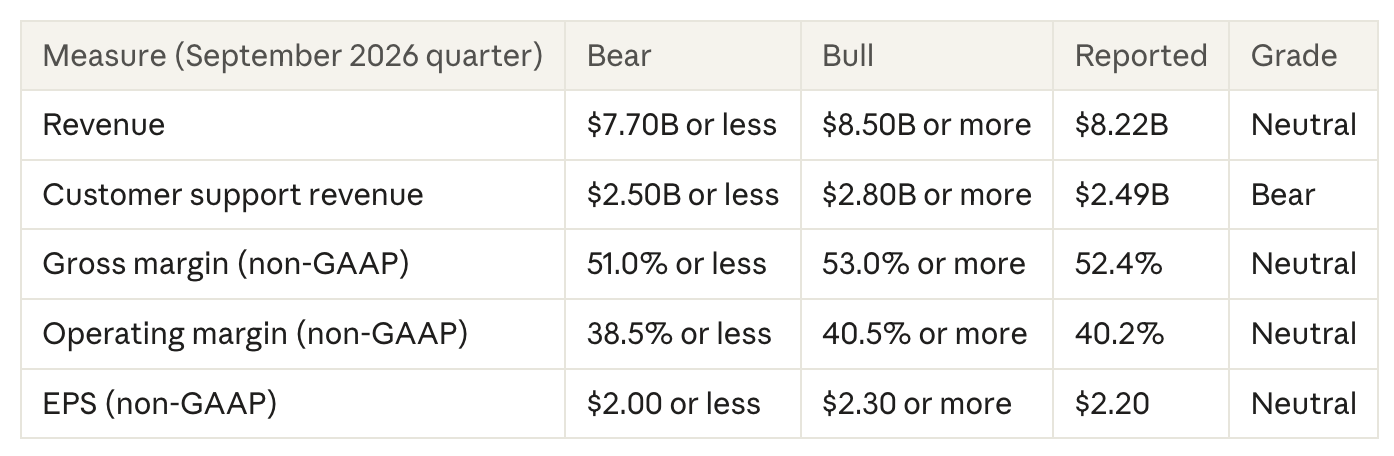
CEO Tim Archer gave a checkable number: “Our preliminary 2027 WFE outlook is for more than $200 billion of spending,” meaning industry chip-equipment spending.
What Comes Next
Coca-Cola reports October 27, Microsoft and Alphabet October 28, and Amazon October 29. Our lines are published. Tesla’s new promises go on the list.
Sources: company releases and SEC filings (Netflix October 20; Tesla, Meta and Lam October 21; P&G October 22; Meta 10-Q October 22); call transcripts from Motley Fool and EVWire.
Thresholds first. Grades later. Misses included.
For information only. Not investment advice. Nothing in this article is a recommendation to buy, sell or hold any security.